
 Italiano
In the plastics industry, the determination of Melt Flow Rate (MFR) and Melt Volume Rate (MVR) is one of the most important tests for quality control, research and development, and the characterization of thermoplastic materials. The Automatic MeP Melt Flow Tester automates the testing process, ensuring accuracy, repeatability and compliance with the main international standards.
The Rheological Behaviour of Thermoplastic Materials
When a thermoplastic material is heated above its melting temperature, it exhibits viscous behaviour that enables processing. Flowability depends on molecular weight, temperature, additives, mineral fillers and material degradation.
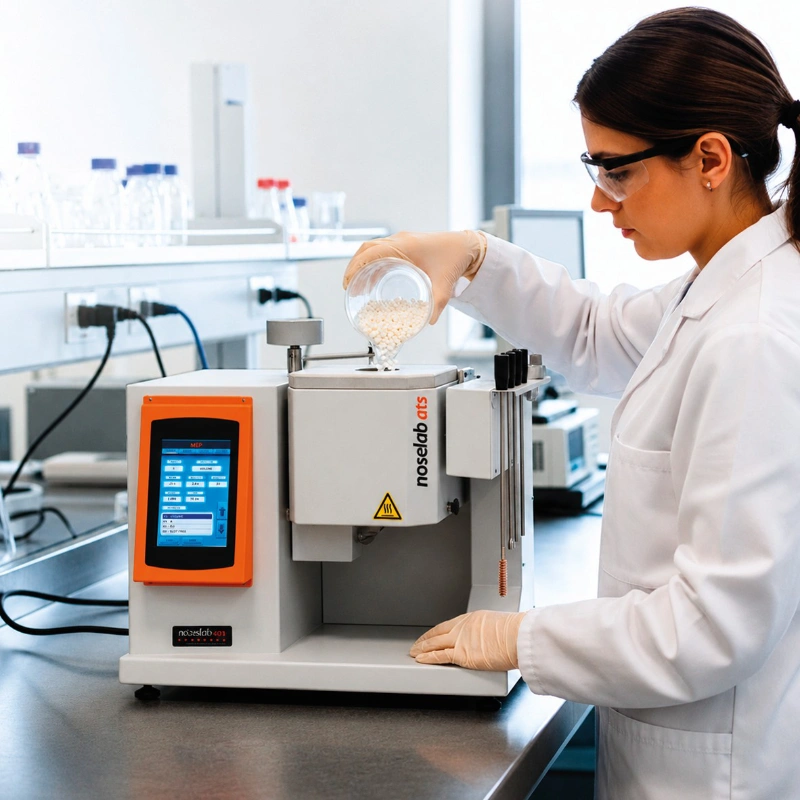
Figure 1. Automatic MeP Melt Flow Tester designed for determining the Melt Flow Rate (MFR) of thermoplastic materials according to the main international standards.
Melt Flow Rate (MFR)
MFR represents the mass of material extruded through a standardized die in ten minutes. The result is expressed in g/10 min and is used to compare materials and monitor production consistency.
Melt Volume Rate (MVR)
MVR measures the volume of material extruded in ten minutes (cm³/10 min). When density is known, the software can automatically convert MVR into MFR.
Differences between MFR and MVR
| Characteristic | MFR | MVR |
|---|---|---|
| Quantity | Mass | Volume |
| Unit | g/10 min | cm3/10 min |
| Weighing | Required | Not required |
| Typical use | Quality Control | Research & Development |
Test Principle
| Step | Operation |
|---|---|
| 1 | Specimen preparation |
| 2 | Temperature stabilization |
| 3 | Load application |
| 4 | Extrusion |
| 5 | Automatic cutting |
| 6 | Result calculation |
The Automatic MeP Melt Flow Tester
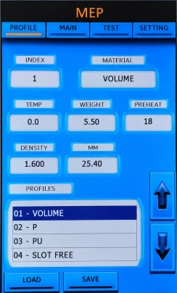
The system integrates a colour touch screen, PID temperature control, program memory, automatic data acquisition, automatic cutting and MeP Link software.
Hastelloy Version
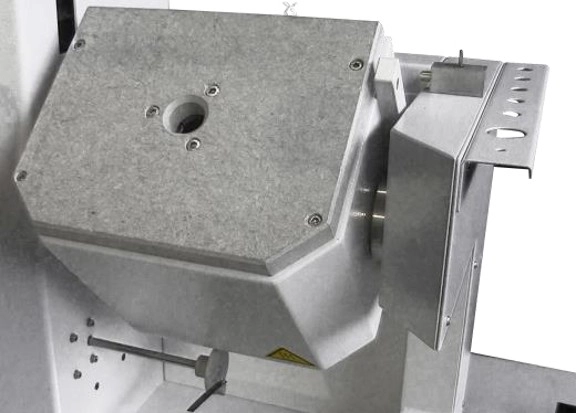
For corrosive materials, a version with a Hastelloy test chamber, piston and die is available while maintaining the instrument’s metrological performance.
Industrial Applications
| Industry | Application |
|---|---|
| Plastics | Quality control |
| Automotive | Compound |
| Packaging | Raw materials |
| Medical | Polymers |
| Recycling | Recycled materials |
| R&D | New formulations |
Reference Standards
| Standard | Description |
|---|---|
| ASTM D1238 | MFR/MVR of thermoplastics |
| ISO 1133 | Determination of MFR and MVR |
| ASTM D2116 | Determination of MFR and MVR |
| ASTM D3159 | Fluoropolymer resins |
| ASTM D3364 | Melt flow index |
| UNI 5640:1978 | Melt flow index |
Indicative temperature/mass conditions
| Plastic/Polymer | ASTM Standard Conditions (C/kg) | ISO Standard Conditions (°C/kg) |
|---|---|---|
| Acetals (copolymer and homopolymer) | 190/2,16190/1,05 | 190/2,16 |
| Acrylics | 230/1,2230/3,8 | 230/3,8 |
| Acrylonitrile-butadiene-styrene (ABS) | 200/5,0230/3,8220/10 | 220/10 |
| Acrylonitrile/butadiene/styrene/ polycarbonate blends |
230/3,8250/1,2265/3,8265/5,0 | — |
| Cellulose esters | 190/0,325190/2,16190/21,60210/2,16 | — |
| Ethylene-chlorotrifluoroethylene copolymer (ECTFE) |
271,5/2,16 | — |
| Ethylene-tetrafluoroethylene copolymer (ETFE) |
297/5,0 | — |
| Nylon | 275/0,325235/1,0235/2,16235/5,0275/5,0 | — |
| Perfluoro(ethylene-propylene) copolymer (FEP) |
372/2,16 | — |
| Perfluoroalkoxyalkane (PFA) | 372/5,0 | — |
| Polycaprolactone | 125/2,1680/2,16 | — |
| Polychlorotrifluoroethylene (PCTFE) | 265/12,5 | — |
| Polyethersulfone (PES) | 380/2,16360/10343/2,16 | — |
| Polyethylene (PE) | 125/0,325125/2,16250/1,2190/0,325190/2,16190/21,60190/10310/12,5 | 190/2,16190/21,6190/0,325190/5 |
| Polycarbonate (PC) | 300/1,2 | 300/1,2 |
| Polypropylene (PP) | 230/2,16 | 230/2,16 |
| Polyphenylsulfone (PPSU) | 365/5,0380/2,16 | — |
Note: test temperature in °C / applied load in kg. A dash indicates that the ISO standard does not specify any codified conditions for that material.
Conclusions
The Automatic MeP Melt Flow Tester is a complete solution for quality control and research laboratories requiring reliable and repeatable measurements of Melt Flow Rate (MFR) and Melt Volume Rate (MVR).

CONTACT US
Browse the Noselab ATS catalogue: discover the equipment available!
Contact us now for more information
CONTACT US